Consciousness as a Subsystem
Consciousness as a Subsystem
Consciousness is pivotal to our worldview. It is through consciousness that a world appears to us. Any serious attempt to understand reality must reckon with consciousness as a central fact. Yet consciousness is peculiarly difficult to think about clearly. We know it from the inside, and that very intimacy makes it easy to misdescribe.
This essay does not deny consciousness or seek to alter lived experience. What needs revision is our reflective understanding of consciousness. Some of our most natural ways of thinking about it — the inner theatre, the soul-like subject, the sovereignty of conscious will — are mistaken. We need a reflective view that is more in line with what modern science suggests.
Direct Realism and the Cartesian Theatre
We can begin with the way consciousness presents itself in ordinary experience. As we live, we inhabit a world of objects and events. Experience feels like direct contact with the world. We do not normally feel that we are inspecting inner representations. We feel ourselves simply to be here, dealing with things out there. In that sense, direct realism¹ captures something important about consciousness as lived. Even if science later tells us that perception is not as it seems, we will still go on living in this direct realist way. It is not merely an error to be discarded, but a description of the everyday form consciousness takes from within.
That is consciousness as lived. But we also form reflective views about what consciousness is, and our common, instinctive picture is misleading. We imagine an inner screen on which a picture appears for a further observer. We think of consciousness as the central ruler of the mind, of the self as a continuing inner subject, and of agency as the exercise of a special inner power. This broad family of ideas culminates in what Daniel Dennett ridiculed as the Cartesian Theatre.² These ways of thinking feel natural enough. But they explain consciousness only by inflating it, turning it into something impossible or beyond the natural world.
The inner observer does not solve the mystery, because it would itself need to perceive, interpret, and be conscious. It merely puts a spectator inside the head and leaves the real problem untouched. It also encourages the thought of a soul-like perceiver and exaggerates the sovereignty of conscious will. So the picture does not solve the mystery but deepens it.
Consciousness as a limited subsystem
A better view of consciousness starts by recognising that both direct realism and the Cartesian picture overestimate consciousness. Because consciousness is the part of the mind available from the inside, we naturally treat it as central. Historically, even the idea of an unconscious once seemed startling. Yet the deeper truth is the reverse. Non-conscious processes overwhelmingly dominate mental life. The body keeps going, perception unfolds, habits form, emotions arise, and actions are prepared largely outside awareness. Consciousness is sparse, intermittent, and narrow by comparison. It comes and goes, focuses on one thing and then another, and rides on top of much stronger underlying systems.
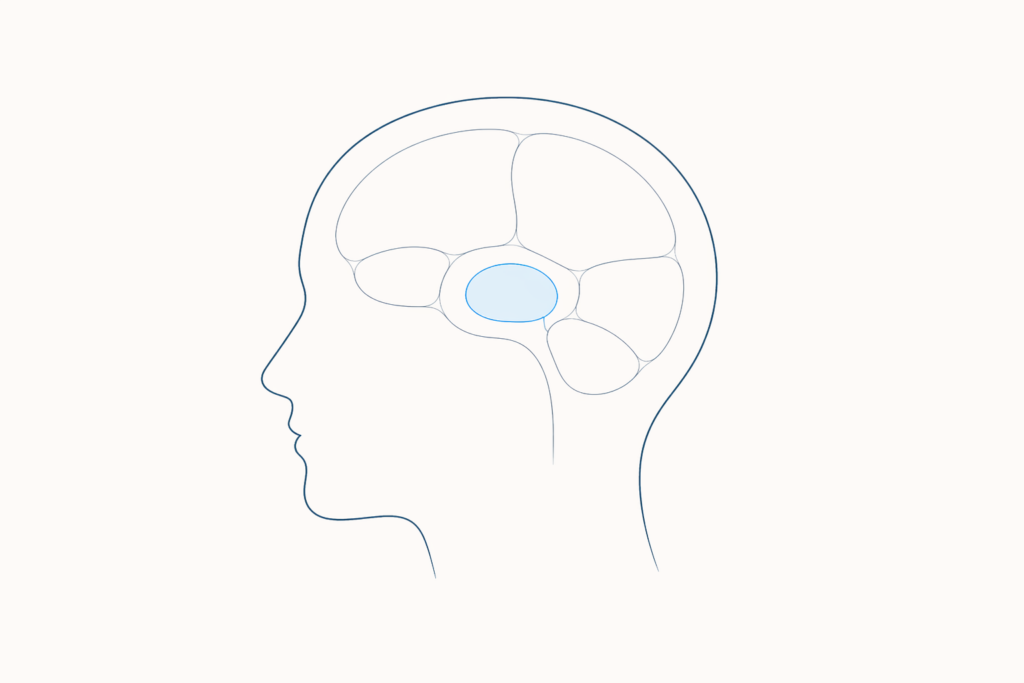
This suggests that consciousness is best understood not as the ruler of the mind but as a subsystem within it. It is a limited-capacity subsystem for global access, simplified modelling, flexible control, and selective intervention. It can bring some information into the foreground, compare alternatives, rehearse possibilities, redirect attention, and sometimes inhibit or reshape ongoing processes. In that sense it is like an app on a smartphone: a specialised layer doing a distinctive task, not the whole system that keeps the device running. It is a thin but important part within a much larger and older system. The image of a subsystem captures both its significance and its limits.
Valence, narrative, and agency
Conscious experience is also valenced.⁴ Things do not show up in consciousness as neutral data. They appear as pleasant or painful, attractive or aversive, hopeful or threatening. Consciousness is therefore not just a cognitive subsystem but an evaluative one. It is oriented towards better future experience, and we care about many things largely because of the ways they bear on conscious life. Yet consciousness is not sovereign even here. The familiar tension between what I judge best and what some deeper part of me is pushing towards is built into the architecture.
A further feature of consciousness is that it remembers previous conscious moments and anticipates future ones. It binds selected moments into an experienced thread. The organism lives in immense complexity, but what we usually call my life is often the much thinner path traced by consciousness through it. Consciousness is therefore not only a workspace but also a narrative-integrating subsystem. It turns scattered episodes into an experienced story. Without such temporal stitching there could still be experiences, but much less of what we think of as a persisting self. Social life, too, largely proceeds by thinking about what is going on in other conscious minds. Our bonds are formed not just organism to organism, but stream of consciousness to stream of consciousness. The narrated thread is not the whole life of the organism, but it is the life as experienced from within and the aspect of life most central to social life.
Consciousness also carries a feeling of agency. Some actions and some thoughts are experienced as mine, as guided or initiated by me. I feel that I make my body act, and that I direct my thoughts. That does not show that consciousness is the true source of all action. Much of the causal work is still being done by non-conscious systems. But consciousness represents a small portion of the organism’s action and cognition as owned and guided, and this matters for deliberation, responsibility, planning, and self-understanding.
The feeling of a soul
The feeling of having a soul, an inner perceiver to whom experiences happen, can also be explained within this framework. Consciousness presents experience as mine, from here, and as continuing through time. It carries ownership, perspective, continuity, and some degree of agency. Given that structure, it is natural to imagine a further inner subject standing behind experience, a continuing perceiver who has the experiences. But this is another interpretive mistake. We instinctively read continuity of experience as evidence for a continuing perceiver, yet when we look closely inside, introspectively, we find no such thing there.⁵ Nor does neuroscience reveal any central inner witness in the brain. What feels like a soul may instead be the result of a transparent self-model, a model so effective that we do not recognise it as a model at all.⁶ We simply seem to discover an inner perceiver already there. The soul-like subject is therefore not the explanation of consciousness, but one of consciousness’s own products.
A better scientific picture
Contemporary science offers a better picture of consciousness than either direct realism or the traditional Cartesian model. Perception is increasingly understood as active, predictive, and embodied rather than passive reception of the external world.³ The brain draws on past experience, bodily state, and incoming signals to generate a usable model of the world and of the organism itself. On this view, consciousness is not a transparent window onto reality but a selective construction shaped by the demands of action and survival. We think we are seeing the world; in truth we are experiencing a model.
This scientific picture also supports the view of consciousness as a subsystem. The brain is a vast and largely non-conscious system processing many things at once, while consciousness handles only a narrow and selective stream. What enters consciousness is just a small and simplified part of the mind’s wider activity. Our experience is therefore not of the whole mind, but of a limited model of world and self generated within it.
This scientific picture has an evolutionary dimension. Consciousness should bear the marks of evolution: not a clean design for truth, but a workable arrangement for survival. Human consciousness was probably shaped by strong selection pressures arising from our distinctive niche of language, culture, planning, and social life. Yet the timescale has been relatively short compared with that of older biological systems, so we should expect imperfections. Human consciousness is likely to differ significantly from animal consciousness, even if more basic affective mechanisms are widely shared.⁸
The evolutionary picture also helps explain why we so naturally fall into reflective mistakes about consciousness. We evolved to use consciousness, not to understand it clearly, and we evolved to think about it in instinctive ways because those ways were useful for survival. It is unsurprising, then, that we live as direct realists and drift on reflection into the Cartesian Theatre. To think of oneself as a continuing soul may help to concentrate concern for the self and to simplify understanding, even if it is not literally true.
Narrowing the Hard Problem
This account does not solve the Hard Problem of consciousness.⁷ It does not explain why physical or biological processes give rise to experience at all. But it may help reduce the apparent size of the problem by enabling us to describe consciousness more accurately. Much of what we instinctively take consciousness to be — a central ruler, an inner theatre, a perfect picture of reality, a soul-like perceiver — belongs not to consciousness itself but to our natural misinterpretation of it. What remains to be explained is therefore less grand and less mythologised: not a perfect inner world, but a sparse, valenced, narrative-bearing subsystem within a much larger non-conscious organism. We do not answer the Hard Problem, but we can narrow it by seeing more clearly what consciousness actually is.
This view is naturalistic. It asks only that we stop inflating consciousness, selfhood, and choice into entities or powers outside nature. It does not ask us to stop talking about persons, choices, or conscious lives unfolding through time. At the level of the person, these are appropriate ways to describe natural phenomena. Selfhood remains real without requiring a soul; choice remains real without requiring a will that stands beyond causation.
This also changes the wider philosophical landscape. An inflated view of consciousness has helped to make it seem like an impenetrable philosophical problem. When consciousness is treated as a perfect inner light, a soul-like presence, or an inexplicable extra ingredient in reality, the mystery can only deepen. A deflated view does not remove the mystery, but it makes it smaller, cleaner, and more continuous with the rest of nature.
An organism talking to itself
I see consciousness as wholly tied to the physical world. It is, essentially, an evolved subsystem through which an organism talks to itself about where it is. It is a trick that brains have worked out, one more example of nature’s astonishing ingenuity. Consciousness may not even be nature’s most impressive achievement. Yet it created experience and value, a new dimension of reality, and is therefore the most metaphysically important thing nature has produced.
Consciousness is pivotal to our worldview. But the consciousness that matters here is not a ghostly observer or inner ruler. It is a limited, evolved, first-person subsystem through which a world appears, a life is felt, and a self is narrated. To understand consciousness better is not to diminish its importance, but to place it more truthfully within nature.
Endnotes
¹ Direct realism is the view that in ordinary perception we are directly aware of objects and events in the world, not first of inner images or sense-data.
² Cartesian Theatre is Dennett’s label for a picture that is often associated with Descartes. Descartes himself did not use this phrase, but he did hold that the thinking self is distinct from the material body, and that what we are most certain of is the existence of ourselves as thinking things. That encourages the image of an inner subject to whom experiences are presented.
³ Predictive processing is a broad family of theories on which perception depends heavily on top-down prediction constrained by incoming signals.
⁴ Valence refers to the felt positive or negative character of experience: pleasure and pain, attraction and aversion, comfort and distress.
⁵ Hume makes the classic introspective point. Looking within, he says, he never catches himself without a perception and never observes anything but the perception. Hence his suggestion that the mind is ‘nothing but a bundle or collection of different perceptions’. We instinctively infer a continuing perceiver from the continuity of experience, but once we look for that supposed inner subject we do not find a soul-like substance, only the changing stream of experience.
⁶ A self-model is the organism’s representation of itself as a locus of perception, action, and concern. Calling such a model transparent means that it does not appear to us as a model. We seem simply to encounter a self already there.
⁷ The Hard Problem, in Chalmers’s sense, is not the question of what consciousness does or what neural processes correlate with it, but why and how any such processes should be accompanied by subjective experience at all.
⁸ Claims about the evolution and function of consciousness can be speculative. The broad thought is that consciousness should bear the marks of evolutionary usefulness, but stories about why specific features evolved should be treated cautiously.
References
Barrett, Lisa Feldman. Seven and a Half Lessons About the Brain, 2020.
Chalmers, David J. The Conscious Mind: In Search of a Fundamental Theory, 1996.
Descartes, René. Meditations on First Philosophy, 1641.
Dennett, Daniel C. Consciousness Explained, 1991.
Haidt, Jonathan. The Happiness Hypothesis: Finding Modern Truth in Ancient Wisdom, 2006.
Hume, David. A Treatise of Human Nature, 1739–1740.
Humphrey, Nicholas. Soul Dust: The Magic of Consciousness, 2011.
Metzinger, Thomas. The Ego Tunnel: The Science of the Mind and the Myth of the Self, 2009.
Seth, Anil. Being You: A New Science of Consciousness, 2021.